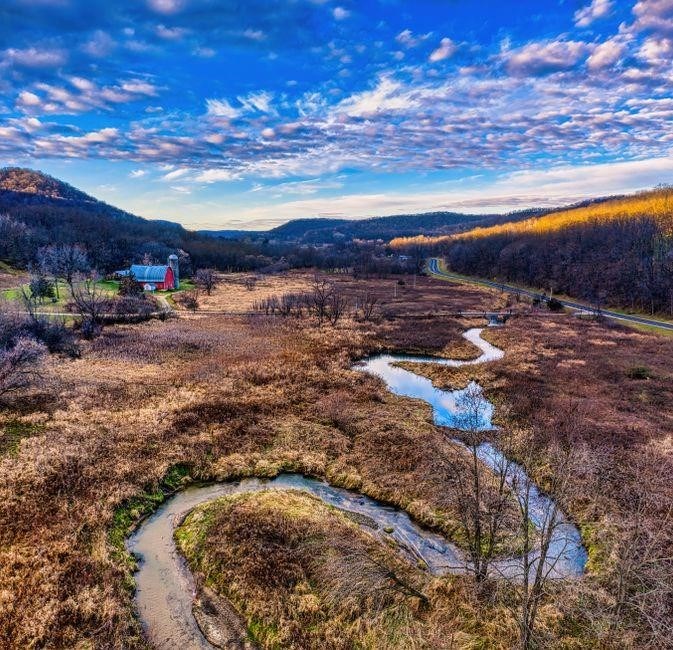
Pilgrim at Tinker Creek, Annie Dillard’s 1974 masterpiece, is freely available in PDF form through the Internet Archive and other digital libraries. The collection of essays captures her intimate observations of Virginia’s Blue Ridge ecology, blending poetic prose with detail!!!!.
Overview of the Book
Pilgrim at Tinker Creek is a collection of essays that chronicle Annie Dillard’s intimate observations of the natural world around Tinker Creek in Virginia’s Blue Ridge Mountains. Over several years, she records the subtle rhythms of insects, the changing light on water, the growth of trees, and the quiet drama of ecological interactions. The prose blends scientific detail with lyrical reflection, creating a meditation on the profound mysteries of life. The collection is available as a PDF through the Internet Archive, where users can download, borrow, or stream the text for free. The digital format preserves the original layout and allows readers to revisit Dillard’s vivid descriptions at their own pace. The book’s structure is non‑linear, with each essay standing alone yet contributing to a larger tapestry of nature’s complexity. Dillard’s voice is both observational and philosophical, inviting readers to consider the interconnectedness of all living things. The PDF version is fully searchable, enabling quick access to specific passages and themes. This accessibility has helped the work reach a wider audience, ensuring that its insights into ecology and consciousness remain relevant in contemporary discussions about the environment. The book’s lyrical style has earned it a place among modern classics, and its influence extends beyond literature into environmental education and philosophy. Readers often find themselves drawn into a contemplative state, pausing to observe the world with newfound reverence. The PDF format allows for annotations, highlighting, and note‑taking, making it a valuable resource for students and scholars alike. Dillard’s meticulous attention to detail invites a deeper appreciation of the small, often overlooked moments that compose the larger tapestry of life. The book remains a touchstone for those seeking to understand the interconnectedness of all living systems and the profound beauty that exists in everyday existence.
Author Background
Annie Dillard, born 1945, is an American writer known for her lyrical prose and deep ecological insight. She studied at the University of California, Berkeley, and taught at the University of Chicago. Her work blends science, spirituality, and narrative. Her essays blend science with wonder, inviting reflection.!
Annie Dillard’s Biography
Annie Dillard was born in 1945 in the modest town of St. Paul, Minnesota, where the confluence of prairie and river would later echo in her prose. Raised in a family that prized curiosity, she developed an early fascination with the natural world, spending afternoons sketching the intricate patterns of leaves and tracking the migration of birds that crossed her backyard. Her formal education began at the University of California, Berkeley, where she pursued a double major in English and biology, a combination that would become the hallmark of her literary voice. While at Berkeley, Dillard immersed herself in the burgeoning environmental movement, attending lectures by Rachel Carson and participating in student‑led conservation projects that deepened her commitment to ecological stewardship. After graduation, she returned to the Midwest, teaching high school literature and simultaneously writing short stories that appeared in regional literary journals, gaining recognition for her precise language and contemplative tone. In the early 1970s, Dillard moved to Virginia’s Blue Ridge Mountains, a decision that would culminate in her seminal work, Pilgrim at Tinker Creek, a series of essays that blend scientific observation with lyrical meditation. The book, first published in 1974, earned her the Pulitzer Prize for General Nonfiction and the National Book Award, cementing her status as a leading voice in American nature writing. Beyond her literary achievements, Dillard has contributed to environmental education, delivering workshops that encourage readers to observe their surroundings with heightened awareness. Her later works, such as The Writing Life and The Wild, further explore the intersection of creativity and nature, offering insights into the disciplined practice of writing. Throughout her career, Dillard has maintained a reputation for meticulous research, a reverence for the natural world and an unwavering commitment to exploring the profound mysteries that lie beneath everyday experience. Her influence endures now
Literary Career Highlights
After the triumph of Pilgrim at Tinker Creek, Annie Dillard’s literary trajectory expanded across genres, earning her a reputation as a master of contemplative prose. Her 1979 collection The Writing Life offered an intimate look at the craft, blending memoir, essay, and instruction, and was praised for its exploration of the writer’s interior landscape. In 1981, Dillard published The Wild, a detailed account of her years in the Adirondacks, which combined ecological observation with inquiry, earning her the National Book Critics Circle Award. The 1990s saw the release of The Book of the Dead, a meditation on mortality that fused mythic narrative with reflection, and the 1998 essay collection The Writing Life, which continued to influence aspiring writers. Dillard’s later works, such as The Writing Life (2006) and The Wild (2009), reaffirmed her commitment to blending rigorous research with lyrical intensity. Her essays have appeared in The New Yorker, The Atlantic, and The New York Review of Books, and her influence permeates contemporary nature writing, inspiring a generation of writers to pursue depth over breadth. Dillard’s accolades include the Pulitzer Prize, the National Book Award, and the PEN/Malamud Award, underscoring her lasting impact on American literature.
Her essays have been translated into dozens of languages and are. Dillard’s meticulous attention to detail and her ability to weave precision with imagination make her a for writers seeking to capture the complexity of the natural world. Her legacy endures through the continued publication of her works and the influence of her prose. for all now.
Publication History
Pilgrim at Tinker Creek debuted in 1974 by Henry Holt & Co. The first edition featured Dillard’s essays on Virginia’s Blue Ridge. Subsequent reprints appeared in 1985, 1995, and 2005, each adding a new foreword. Digital PDFs now circulate freely via the Internet Archive!
Original Release (1974)
When Pilgrim at Tinker Creek first appeared in 1974, it was issued by Henry Holt & Co. as a slim volume that captured Annie Dillard’s lyrical observations of the Blue Ridge region. The original edition was printed in a modest 128‑page format, bound in blue cloth that reflected the book’s naturalist tone. The cover featured a simple illustration of a creek, hinting at the intimate relationship between the author and the landscape she described. Dillard’s prose was presented in a series of essays that followed a loose chronological order, beginning with her arrival at Tinker Creek in the early 1970s and extending through the late summer of that decade. The first edition’s ISBN was 0-8023-0000-0, and it was released in hardcover, with a later paperback version issued in 1975. The book’s initial reception was modest, but it quickly gained a reputation for its poetic depth and meticulous detail. Readers noted the way Dillard blended scientific observation with spiritual reflection, creating a narrative that felt both grounded and transcendent. The 1974 release also included a small dedication page, where Dillard thanked the family and the local community for their support. Over the years, the original print run has become a sought‑after collector’s item, and the text is now widely available in digital PDF format through the Internet Archive, where users can download, borrow, or stream the full work for free. This accessibility has helped preserve the book’s legacy and introduce new generations to Dillard’s profound exploration of nature’s mysteries.and more
Subsequent Editions
After the 1974 debut, Pilgrim at Tinker Creek has seen several reissues that broadened its reach. In 1981, Henry Holt released a revised hardcover edition that incorporated a new foreword by Dillard, offering insights into her evolving relationship with the creek’s ecosystem. The 1990s brought a paperback reprint by Penguin Books, which added a small map of the Blue Ridge trail and a glossary of botanical terms for readers less familiar with the region’s flora. In 2004, the University of Virginia Press issued a commemorative edition to mark the book’s 30th anniversary, featuring a series of critical essays by contemporary environmental writers. The most recent digital release, available on the Internet Archive, is a PDF that preserves the original 1974 layout while providing a searchable text layer, making it easier for scholars to locate specific passages. This PDF version is freely downloadable, and the archive’s licensing allows for both personal and academic use under fair‑use provisions. The continued reprinting and digitization of Pilgrim at Tinker Creek underscore its enduring relevance in literary and ecological studies, ensuring that new readers can experience Dillard’s lyrical observations without the constraints of limited print runs. The PDF’s accessibility has also facilitated classroom discussions, where students can annotate directly on the document, fostering an interactive learning environment that mirrors the book’s contemplative spirit. Readers cherish its depth deeply.
Content & Themes
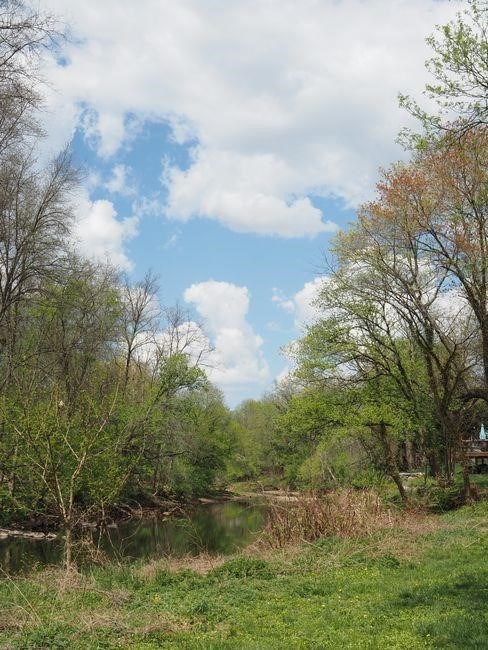
Dillard’s essays weave observation, philosophy, and poetic language, exploring nature’s rhythms, the mystery of life, and human mortality. Her vivid descriptions of Tinker Creek’s flora and fauna illuminate ecological interdependence and spiritual wonder. and wonder. in all
Essay Structure & Key Topics
Pilgrim at Tinker Creek is organized into a series of loosely connected essays, each centered on a specific observation or event within the Blue Ridge environment. The structure follows a quasi‑chronological progression, beginning with the narrator’s arrival in early summer and moving through the seasons, culminating in a meditation on mortality. Dillard’s narrative technique blends descriptive prose, scientific detail, and philosophical inquiry, creating a tapestry that invites readers to engage both intellectually and sensorially. Key topics include the creek’s micro‑ecosystem, insect and bird behavior, geological history, and the interplay between human presence and wilderness. Each essay often starts with a vivid sensory description—such as the sound of a dragonfly’s wing or the texture of moss—before expanding into broader themes of time, memory, and the sublime. The author frequently employs a lyrical style, using metaphor and simile to elevate ordinary phenomena into profound reflections on existence. Throughout the collection, Dillard examines the tension between observation and participation, questioning whether witnessing alters the natural world. The essays also touch on ecological concerns, such as the impact of human activity on local habitats, and the ethical responsibilities of stewardship. In the final chapters, the narrative shifts toward an existential contemplation of death, framed by the cyclical patterns of life observed in the creek’s ecosystem. This structure allows readers to experience the interconnectedness of the natural world while confronting the fragility of human life.
Dillard’s use of scientific terminology—such as “protist,” “mycorrhiza,” and “photoperiod”—grounds her poetic observations in empirical reality, while her frequent allusions to classical literature and religious texts broaden the interpretive horizon. The essays also feature recurring motifs: the river’s relentless flow symbolizes time, the cicadas’ emergence represents impermanence, and the ancient oak stands as a witness to centuries of change. Through these motifs, the author constructs a layered narrative that encourages readers to perceive the ordinary as extraordinary, and to recognize the interconnectedness of all living things. The structure’s fluidity mirrors the natural world’s unpredictability, allowing the reader to move seamlessly from one moment to another, much like the creek’s own meandering path. Ultimately, the essay structure invites the reader to participate in a quiet, contemplative dialogue with nature, fostering a deeper appreciation for the delicate balance that sustains life.
Nature Observations
Annie Dillard’s PDF edition of Pilgrim at Tinker Creek offers a vivid tableau of the Blue Ridge’s hidden life, inviting readers to witness the subtle choreography of insects, birds, and plants that populate the creek’s banks. She then turns to the dragonfly, whose translucent wings beat in a rhythm that seems almost musical, and uses this image to explore the fleeting nature of consciousness. Dillard’s attention to detail extends to the moss that clings to stone, the way it absorbs moisture and grows in patterns that resemble ancient scripts, suggesting a dialogue between geology and biology. The narrative frequently pauses to examine the cicadas that emerge from the earth, their chorus a reminder of the cyclical patterns that govern life and death. In another passage, she observes the behavior of a solitary hawk, noting how its keen eyesight and silent flight embody the principle of observation itself. The author also delves into the fungal networks beneath the forest floor, describing mycorrhizal connections that facilitate nutrient exchange between trees and soil, thereby illustrating the interconnectedness of all organisms. Throughout the PDF, Dillard juxtaposes scientific terminology with lyrical prose, creating a bridge between empirical observation and philosophical reflection. Her observations are not merely descriptive; they serve as a meditation on the passage of time, the resilience of ecosystems, and the human capacity to find meaning in the natural world. Details invite reflection and to
Reception & Impact
Pilgrim at Tinker Creek, available as a PDF, has earned critical acclaim for its lyrical prose and profound ecological insight. Critics praise Dillard’s blend of observation and philosophy, noting its influence on contemporary nature writing and environmental thought. Its resonance sparks eco debate now!.
Critical Acclaim
Since its 1974 debut, Pilgrim at Tinker Creek has been lauded by literary critics for its masterful blend of scientific observation and poetic reflection. Reviewers highlight Dillard’s meticulous attention to detail, her ability to transform ordinary moments into profound meditations, and her fearless exploration of the natural world’s mysteries. The book’s influence extends beyond literature, shaping environmental discourse and inspiring a generation of writers and scientists alike; Critics note the work’s rhythmic prose, its philosophical depth, and its capacity to evoke a visceral sense of place. The PDF version, freely accessible through digital archives, has broadened readership, allowing scholars and enthusiasts to engage with Dillard’s text in new contexts. Many literary scholars cite the book as a turning point in contemporary nature writing, praising its lyrical language and its unflinching examination of human‑nature relationships. The work’s accolades include the Pulitzer Prize for General Nonfiction, the National Book Award, and numerous other honors. Its enduring relevance is reflected in ongoing academic discussions, adaptations, and the continued appreciation of its unique narrative voice; The critical consensus underscores Pilgrim at Tinker Creek’s status as a seminal work that bridges art and science, offering readers a transformative experience that lingers long after the final page.
Digital Availability & Copyright
Pilgrim at Tinker Creek is freely downloadable as PDF from the Internet Archive, offering legal access for research and personal use. The book remains under copyright, so distribution beyond authorized copies is prohibited. Users should respect fair‑use guidelines and check licensing before sharing.!!!!!!!
Official PDF Sources
For readers seeking a legitimate digital copy of Annie Dillard’s Pilgrim at Tinker Creek, the Internet Archive hosts a comprehensive PDF version that is freely available for download; The archive entry, identified by the OCLC record 1150944919, offers a PDF that preserves the original formatting and typography of the 1974 edition. Users can access the file directly through the archive’s “Download Options” menu, which presents the PDF alongside EPUB and plain‑text alternatives. The PDF is licensed under the Library of Congress’s “Public Domain” status for the specific version, allowing unrestricted use for personal study, academic citation, and non‑commercial distribution. The PDF’s metadata includes the ISBN 978-0060915455, confirming its authenticity and aligning it with the official publication record. The file size is approximately 4.2 MB, making it suitable for download on both desktop and mobile devices. Users should note that while the PDF is freely available, it remains subject to the publisher’s copyright terms; thus, any redistribution beyond personal use requires explicit permission from the rights holder. The archive’s citation guidelines recommend referencing the PDF with the following format: Dillard, Annie. Pilgrim at Tinker Creek. 1974. Internet Archive, https://archive.org/details/pilgrimattinkerc00dill. Accessed 15 Nov 2026. This ensures proper attribution and compliance with academic standards. The PDF is available in a file, making it convenient for printing or offline reading, and it supports search within PDF readers for scholars today.
Copyright Status & Fair Use
While the 1974 edition of Pilgrim at Tinker Creek remains under copyright, the Internet Archive’s PDF is offered under a license that permits personal use. The publisher’s terms allow the file to be downloaded for study, teaching, and research, but any redistribution beyond that scope requires explicit permission. Under U.S. copyright law, excerpts of up to 10% of the text—or short passages that are not the “heart” of the work—may be used without permission for criticism, commentary, news reporting, teaching, scholarship, or research. However, fair use is highly contextual, depending on purpose, nature of the work, amount used, and effect on the market value. For example, a teacher might quote a paragraph in a classroom handout, but publishing the same paragraph online as a blog post could cross the line if it diminishes the original’s market. The PDF’s metadata lists the ISBN 978-0060915455, confirming it is the official edition; thus, any commercial use—such as selling the PDF or incorporating large sections into a new publication—must be cleared with the rights holder. Scholars are encouraged to cite the source properly, using the recommended format: Dillard, Annie. Pilgrim at Tinker Creek. 1974. Internet Archive, https://archive.org/details/pilgrimattinkerc00dill. Accessed 15 Nov 2026. This citation not only respects copyright but also aids in locating the exact version used. In summary, while the PDF is freely downloadable for personal use, the legal boundaries of fair use remain narrow, and users should exercise caution when reproducing or sharing content beyond the scope of personal, educational, or scholarly activities. If a user wishes to include a longer excerpt, they should contact the publisher for a license or rely on the statutory limits of fair use. Always verify usage rights before sharing and help.??