
Lucitone 199 Shade Guide: A Comprehensive Overview
Lucitone 199, a widely utilized system by Dentsply Trubyte, offers four distinct glossy shade tabs – Original, Light, Light Reddish Pink, and Dark Pink –
for consistent denture fabrication and excellent color stability.
Lucitone 199 represents a cornerstone in denture base material shade selection, developed by Dentsply Trubyte. This system is meticulously designed to aid dental professionals in achieving aesthetically pleasing and lifelike dentures. The core of the system lies in its four carefully curated shade tabs: Original, Light, Light Reddish Pink, and Dark Pink.
These shades aren’t arbitrary; they’re formulated to mimic the natural variations observed in human gingiva. The system’s popularity stems from its ability to provide a reliable and consistent method for shade matching, crucial for patient satisfaction. It’s frequently referenced alongside other gingival shade indicators like the Ivocap Plus set, offering a comparative standard within the dental laboratory and clinical setting.
The Lucitone 199 system prioritizes color stability, ensuring the fabricated denture maintains its intended shade over time, a vital aspect of long-term aesthetic success.
Historical Context of Denture Shade Guides
Historically, denture shade selection relied heavily on subjective visual comparisons, often lacking standardized systems. Early attempts involved rudimentary shade cards, prone to inconsistencies due to lighting and individual perception. The need for a more objective approach spurred the development of formalized shade guides, aiming to minimize errors and improve aesthetic outcomes.
The introduction of acrylic resins in denture base materials necessitated dedicated shade systems. Lucitone 199 emerged as a significant advancement, offering a defined set of four shades specifically tailored for gingival tissues. Prior to systems like Lucitone 199, matching gingival shades was particularly challenging, often resulting in unnatural-looking prostheses.
The evolution continues with digital technologies, but Lucitone 199 remains a relevant benchmark, representing a pivotal step towards standardized and predictable denture aesthetics.
Understanding the Lucitone 199 Shade Tabs
Lucitone 199 features four glossy shade tabs: Original, Light, Light Reddish Pink, and Dark Pink, designed to replicate a range of gingival tissue tones effectively.
Lucitone 199 Original Shade
The Lucitone 199 Original Shade tab serves as a foundational reference point within the system, representing a commonly observed, natural gingival hue. It’s frequently employed as a starting point for shade matching, particularly in patients exhibiting moderate pigmentation. This shade aims to mimic the typical pink coloration seen in many individuals, offering a versatile option for a broad spectrum of cases.
Dentists often utilize the Original shade when a patient’s existing gingiva presents with a relatively standard pink tone, avoiding excessive redness or paleness. Its balanced chromatic properties make it a reliable choice for achieving aesthetically pleasing and lifelike denture bases. The glossy finish of the tab further enhances its ability to accurately reflect light, contributing to a more realistic appearance. Careful consideration of the patient’s overall complexion and existing dentition is crucial when selecting this shade.
Lucitone 199 Light Shade
The Lucitone 199 Light Shade tab is specifically designed for patients presenting with paler or less pigmented gingival tissues. It offers a lighter, more translucent pink hue compared to the Original shade, making it ideal for individuals with reduced melanin levels or those who have experienced significant tissue recession. This shade aims to avoid an unnatural, overly rosy appearance in patients with lighter complexions.
Dentists frequently select the Light shade when matching dentures to patients with a generally pale oral mucosa. Its subtle coloration helps create a more harmonious blend with the surrounding tissues, resulting in a natural-looking restoration. The glossy finish ensures accurate light reflection, enhancing the overall aesthetic outcome. Careful evaluation of the patient’s skin tone and existing gingival color is paramount when utilizing this shade option.
Lucitone 199 Light Reddish Pink Shade
The Lucitone 199 Light Reddish Pink Shade tab addresses a nuanced range of gingival tones, offering a warmer, more natural appearance for patients exhibiting a subtle reddish undertone in their tissues. This shade is particularly useful for individuals with moderate pigmentation or those who display a slight vascularity within their gingiva. It avoids the starkness of a purely pink hue, providing a more lifelike representation.
Dentists often choose this shade when matching dentures to patients with a healthy, slightly flushed gingival appearance. The reddish tint mimics the natural blood supply within the tissues, enhancing the overall aesthetic realism. Its glossy finish contributes to accurate light interaction, further improving the natural look. Careful consideration of the patient’s complexion and existing gingival coloration is crucial for optimal shade selection.
Lucitone 199 Dark Pink Shade
The Lucitone 199 Dark Pink Shade tab represents the deepest tone within the Lucitone 199 system, designed for patients exhibiting significantly darker gingival tissues. This shade is frequently selected when matching dentures for individuals with substantial pigmentation, often seen in those with darker skin tones or a history of melanin production in the gingiva. It provides a necessary option for achieving a harmonious aesthetic outcome.
Clinicians utilize this darker shade to accurately replicate the natural coloration of heavily pigmented tissues, avoiding a washed-out or unnatural appearance. The glossy finish, consistent across all Lucitone 199 tabs, ensures proper light reflection and contributes to a realistic gingival appearance. Careful assessment of the patient’s overall complexion and existing gingival color is paramount for successful shade matching with this darker option.

Color Theory and Denture Aesthetics
Lucitone 199’s success relies on understanding color principles; accurate shade selection is vital for natural-looking dentures, influenced by lighting and individual perception.
The Importance of Accurate Shade Selection
Accurate shade selection is paramount in achieving esthetic and patient-satisfying dentures. Utilizing the Lucitone 199 shade guide, clinicians strive to replicate the natural appearance of gingival tissues. A mismatch can lead to an unnatural look, impacting patient confidence and acceptance of the prosthetic.
The Lucitone 199 system, with its four shades – Original, Light, Light Reddish Pink, and Dark Pink – provides a foundational range for matching diverse patient presentations. However, it’s crucial to remember that gingival color isn’t uniform. Factors like age, health, and anatomical location influence shade. Therefore, careful observation and comparison against the guide under standardized lighting are essential.
Selecting the correct shade minimizes the risk of metamerism, where a shade appears to match under one light source but differs under another. A precise match enhances the overall aesthetic outcome, contributing to a more natural and harmonious smile.
Factors Influencing Perceived Denture Shade
Several factors beyond the Lucitone 199 shade guide itself impact how denture shade is perceived. Individual patient characteristics play a significant role; skin tone, lip color, and the remaining dentition all contribute to the overall aesthetic. The thickness of the gingival tissues and their vascularity also influence color perception.
Furthermore, the age of the patient is crucial, as gingival tissues tend to become paler with age. The Lucitone 199 guide offers shades to address this, but clinical judgment remains vital. Additionally, the denture base material’s translucency and surface texture affect how light interacts with the shade, influencing its appearance.
Finally, understanding that perceived shade is subjective is essential. Patient expectations and preferences should be considered alongside technical accuracy when utilizing the Lucitone 199 system.
Impact of Lighting on Shade Matching
Accurate shade matching with the Lucitone 199 guide is profoundly affected by lighting conditions. Different light sources emit varying spectral compositions, leading to metamerism – where two colors appear to match under one light but differ under another. Daylight is generally considered ideal, but its variability makes consistent assessment challenging.
Artificial lighting, such as fluorescent or incandescent, can significantly distort perceived shades. Utilizing standardized lighting, like CIE illuminant D65, is crucial for reliable results when employing the Lucitone 199 system. The angle of illumination also matters; direct light can create shadows, altering shade perception.
Clinicians should avoid relying on ambient room lighting and instead use a dedicated shade-matching lamp to ensure consistent and accurate shade selection with Lucitone 199.
Clinical Applications of the Lucitone 199 Guide
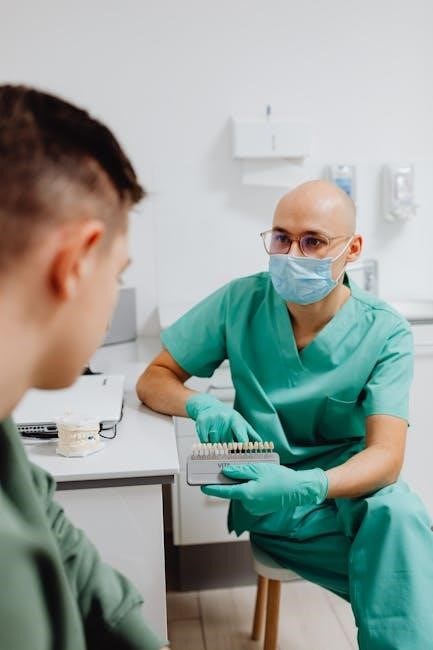
The Lucitone 199 guide facilitates precise shade selection for complete, partial dentures, and denture relines/rebases, ensuring aesthetic and functional prosthetic outcomes.
Shade Selection for Complete Dentures
Lucitone 199’s four shade tabs – Original, Light, Light Reddish Pink, and Dark Pink – provide a foundational palette for complete denture fabrication. Accurate shade matching is paramount, considering the patient’s complexion, lip color, and existing tooth shade (if any remnants are present).
Clinicians often begin with the Original shade as a baseline, then adjust based on individual patient characteristics. The Light shade is suitable for patients with fairer complexions, while the Dark Pink shade complements those with deeper skin tones. The Light Reddish Pink offers a natural gingival tone for many patients.
It’s crucial to view the shade tabs under standardized lighting conditions to minimize perceptual errors. A systematic approach, comparing the tabs to the patient’s oral tissues, ensures a harmonious and aesthetically pleasing result. Proper shade selection significantly impacts patient satisfaction and the overall success of the complete denture.
Shade Selection for Partial Dentures
When utilizing the Lucitone 199 shade guide for partial dentures, matching the existing dentition and gingival tissues is critical for a seamless aesthetic integration. Unlike complete dentures, partials require a more nuanced approach, considering the remaining natural teeth’s shade and translucency.
The Original and Light shades are frequently employed, often requiring blending or layering techniques to achieve a precise match. Careful observation of the patient’s gingival color is essential; the Light Reddish Pink or Dark Pink tabs may be used to replicate the natural tissue tone.
Clinicians should assess the partial denture framework’s influence on the perceived shade, as metal substructures can affect color transmission. Consistent lighting and a methodical comparison with the patient’s oral environment are vital for optimal results, ensuring the partial denture blends harmoniously with the existing dentition.
Shade Selection for Denture Reline/Rebase
Employing the Lucitone 199 shade guide during denture reline or rebase procedures demands careful consideration of the existing denture base shade and the patient’s altered tissue contours. Often, the original denture base shade has shifted over time due to wear, staining, or material degradation.
A meticulous comparison between the existing denture and the Lucitone 199 tabs is crucial. The Light or Original shades are commonly selected for relines, aiming to closely match the original base color. However, if significant tissue changes have occurred, the Light Reddish Pink or Dark Pink tabs might be necessary to harmonize with the new gingival profile.
It’s vital to assess the denture teeth’s shade as well, ensuring the relined or rebased denture maintains a cohesive aesthetic appearance. Accurate shade selection minimizes discrepancies and enhances patient satisfaction.

Comparing Lucitone 199 to Other Shade Guides
Lucitone 199 is frequently contrasted with systems like Ivocap Plus, which offers fewer shades, and other acrylic guides, differing in glossiness and color representation.
Lucitone 199 vs. Ivocap Plus Gingiva Indicator Set
Lucitone 199 and the Ivocap Plus Gingiva Indicator Set represent distinct approaches to shade selection for dentures. While Lucitone 199 provides four glossy shade tabs – Original, Light, Light Reddish Pink, and Dark Pink – Ivocap Plus features a set of only four shades: pink, fibered light pink, fibered pink, and Preference.
This difference in the number of options impacts the nuance achievable in matching gingival tissues. Ivocap Plus aims for broader categorization, while Lucitone 199 offers more granular control. The glossy finish of Lucitone 199 tabs is also a key distinction, influencing how light interacts with the shade and potentially affecting perceived color. Clinicians often choose based on their preference for shade range and surface texture representation.
Lucitone 199 vs. Other Acrylic Shade Guides
Compared to numerous other acrylic shade guides, Lucitone 199 distinguishes itself through its consistent color stability and specifically formulated glossy finish. Many alternative guides present a matte surface, altering light reflection and potentially leading to discrepancies during shade matching. While some guides offer a wider spectrum of shades, Lucitone 199’s four-tab system – Original, Light, Light Reddish Pink, and Dark Pink – provides a practical and frequently sufficient range for most patients.
Furthermore, the established reputation and widespread use of Lucitone 199 contribute to its reliability. Denture technicians and clinicians are often familiar with its characteristics, facilitating communication and consistent results. However, some guides may offer more specialized shades for unique patient presentations.
Advantages and Disadvantages of Lucitone 199
Lucitone 199 boasts several advantages, notably its consistent color stability, ensuring the fabricated denture retains its shade over time. The glossy finish accurately mimics natural tissue, enhancing aesthetic outcomes. Its simplicity, with only four shades – Original, Light, Light Reddish Pink, and Dark Pink – streamlines the selection process for many clinicians. However, this limited shade range can be a disadvantage when matching highly individualized gingival tones.
Some clinicians find the shade differentiation subtle, potentially leading to matching errors, especially under varying lighting conditions. Compared to guides with more nuanced options, Lucitone 199 may require layering or staining techniques to achieve precise matches for complex cases.

Technical Aspects of Lucitone 199
Lucitone 199 tabs are crafted from acrylic resin, ensuring color stability and durability. Rigorous manufacturing processes and quality control maintain consistent shade reproduction for reliable results.
Material Composition and Color Stability
Lucitone 199 shade guide tabs are primarily composed of acrylic resin, a material selected for its ability to mimic the appearance of natural gingival tissues. This acrylic composition is crucial not only for aesthetics but also for achieving long-term color stability. Unlike some materials prone to fading or discoloration over time, Lucitone 199 is formulated to resist these changes, ensuring the selected shade remains consistent throughout the denture’s lifespan.
The manufacturing process incorporates specific pigments and stabilizers that contribute to this enhanced color retention. These additives work to minimize the impact of external factors like UV exposure and staining from food and beverages. This is particularly important as patients often expect their dentures to maintain their original appearance for several years. The consistent material composition across all tabs within the Lucitone 199 system further guarantees reliable shade matching and predictable outcomes.
Manufacturing Process and Quality Control
The production of Lucitone 199 shade guide tabs involves a meticulous manufacturing process designed to ensure uniformity and accuracy. Each tab is created through a precise molding technique utilizing high-quality acrylic resin. Strict quality control measures are implemented at every stage, beginning with the raw material inspection and extending through the final product assessment.
Color consistency is paramount, and each batch of acrylic is rigorously tested to meet pre-defined colorimetric standards. Dimensional accuracy is also carefully monitored to guarantee that all tabs within a set are identical in shape and size. This dedication to precision minimizes variability and enhances the reliability of shade matching. Furthermore, the glossy finish is consistently applied and inspected to ensure optimal light reflection and visual assessment during clinical use, contributing to the overall quality of the Lucitone 199 system.
Glossy Finish and its Significance
The distinctive glossy finish of Lucitone 199 shade tabs isn’t merely aesthetic; it plays a crucial role in accurate shade matching. This polished surface mimics the natural luster of oral tissues, allowing for a more realistic visual comparison during denture selection. Unlike matte finishes, the gloss reflects light in a manner similar to hydrated mucosa, reducing discrepancies caused by differing light interaction.
This reflective quality is particularly important when assessing shades under varying lighting conditions. The glossy surface helps clinicians perceive the true color, minimizing the influence of ambient light. Maintaining this consistent gloss throughout the manufacturing process is a key quality control measure. A uniform, polished surface ensures reliable and repeatable shade assessments, ultimately contributing to more lifelike and aesthetically pleasing denture outcomes with the Lucitone 199 system.
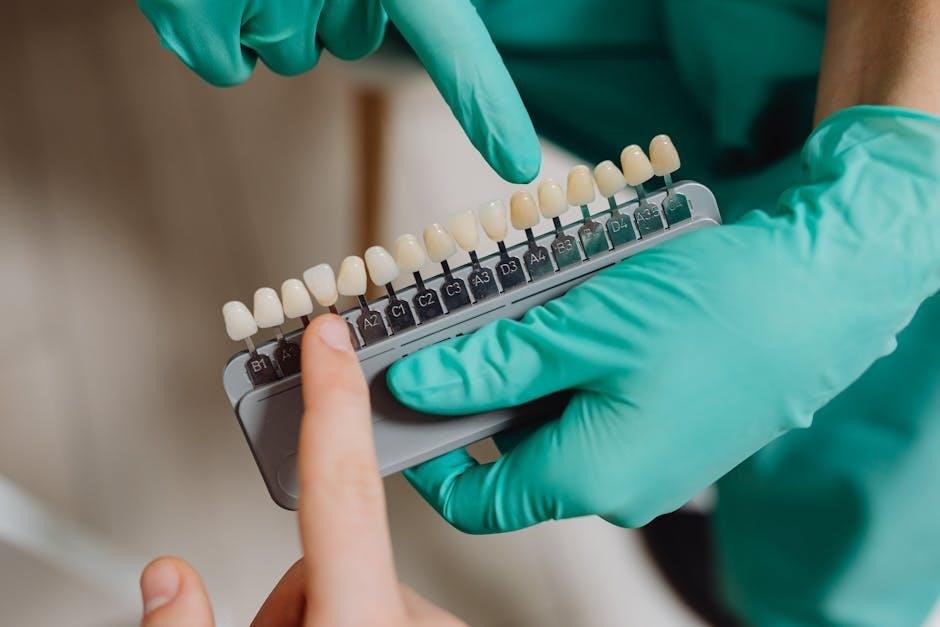
Troubleshooting Shade Matching with Lucitone 199
Addressing metamerism, tooth variations, and managing patient expectations are vital when utilizing the Lucitone 199 guide for optimal denture shade replication.
Addressing Metamerism
Metamerism, a significant challenge in shade matching, occurs when two colors appear to match under one lighting condition but differ under another. This phenomenon arises from the way the eye perceives color, integrating the spectral reflectance of an object. When using the Lucitone 199 shade guide, clinicians must be aware of this potential discrepancy.
To mitigate metamerism, it’s crucial to evaluate the denture shade under multiple light sources – daylight, incandescent, and fluorescent – mimicking the patient’s typical environment. Utilizing a metameric matching instrument can also aid in identifying potential shade shifts. Furthermore, consider the patient’s existing dentition and surrounding tissues, as these influence perceived color. Careful observation and comparison under varied lighting conditions are essential for achieving a harmonious and aesthetically pleasing result with the Lucitone 199 system.
Dealing with Individual Tooth Shade Variations
Natural teeth exhibit inherent shade variations, even within a single arch. Replicating this natural appearance is vital for a lifelike denture. While the Lucitone 199 shade guide provides a foundational palette, clinicians must account for these individual nuances. Avoid a monotonous, uniform shade selection; instead, embrace subtle gradations.
Employ layering techniques with acrylic resins to mimic the natural transition of shades. Utilize different Lucitone 199 shades for incisal, middle, and cervical thirds of each tooth. Characterization with stains and glazes further enhances realism, replicating subtle color variations and translucency. Careful observation of the patient’s existing dentition, or photographs if necessary, guides these adjustments, ensuring a personalized and aesthetically pleasing outcome when utilizing the Lucitone 199 system.
Managing Patient Expectations
Realistic expectations are crucial for patient satisfaction with dentures, and the Lucitone 199 shade guide aids in this process. Clearly communicate that dentures, even with precise shade matching, won’t perfectly replicate natural teeth. Explain that factors like lighting and individual perception influence perceived shade. Show patients the Lucitone 199 shade tabs and discuss the chosen shade, emphasizing it’s a starting point.
Utilize photographs of previously completed dentures using similar Lucitone 199 shades to illustrate potential outcomes. Address concerns about metamerism – shade shifts under different lighting – and explain that minor adjustments may be needed post-delivery. Open communication and a collaborative approach, guided by the Lucitone 199 system, foster trust and ensure a positive experience.
Future Trends in Denture Shade Guides
Lucitone 199’s future likely involves integration with digital shade matching and AI technologies, potentially leading to customized shade guides for personalized denture aesthetics.
Digital Shade Matching Technologies
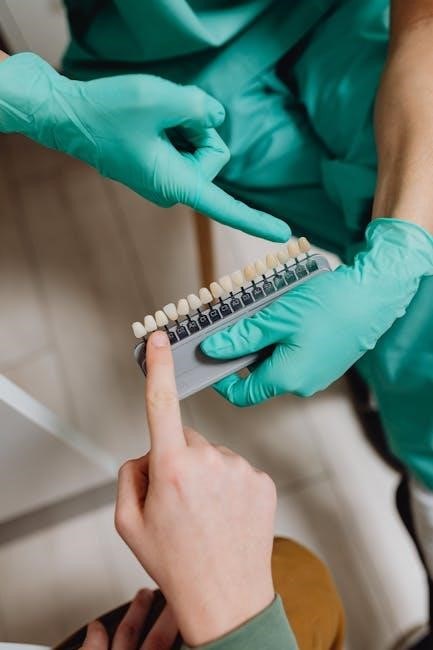
The integration of digital technologies represents a significant evolution in denture shade selection, moving beyond the traditional reliance on visual comparisons with Lucitone 199 tabs. Spectrophotometers and digital cameras are increasingly employed to capture precise color data of the patient’s existing dentition and gingiva. This data is then utilized to create a digital shade map, offering a more objective and reproducible method for matching denture shades.
Software algorithms can analyze these digital readings and suggest the most appropriate Lucitone 199 shade or even formulate a customized acrylic shade. Furthermore, intraoral scanners can capture the patient’s oral anatomy and tissue color simultaneously, streamlining the shade-matching process. These advancements aim to minimize subjective errors and enhance the aesthetic outcome of dentures, potentially improving patient satisfaction and reducing remakes. The future may see AI-powered systems that automatically analyze facial features and skin tone to predict optimal denture shades, further refining the process.
Customized Shade Guides
While the Lucitone 199 system provides a standardized approach to denture shade selection, the inherent variability in patient tissue tones and preferences necessitates exploring customized shade guides. Recognizing that a one-size-fits-all solution isn’t always ideal, dental laboratories are beginning to offer bespoke shade tabs tailored to individual patient needs. This involves creating a personalized palette based on precise color measurements taken from the patient’s natural teeth and gingiva.
These customized guides can incorporate subtle variations not represented in the standard Lucitone 199 range, resulting in a more harmonious and natural-looking restoration. Digital technologies, like spectrophotometry, play a crucial role in this process, enabling accurate color replication. The development of 3D-printed shade guides, offering a wider spectrum of options, is also gaining traction, promising a future where denture aesthetics are truly individualized.
The Role of Artificial Intelligence
Artificial Intelligence (AI) is poised to revolutionize denture shade matching, moving beyond the subjective assessment inherent in traditional methods like the Lucitone 199 guide. AI-powered systems can analyze digital images of a patient’s existing dentition and gingival tissues, accurately predicting the optimal denture shade with remarkable precision. These algorithms consider factors like age, skin tone, and even ambient lighting conditions, minimizing the risk of metamerism.
Furthermore, AI can learn from vast datasets of successful shade matches, continuously improving its predictive capabilities. Integration with intraoral scanners and CAD/CAM technology allows for seamless digital workflows, eliminating the need for physical shade tabs altogether. While Lucitone 199 remains a valuable tool, AI promises a future of objective, personalized, and highly aesthetic denture fabrication.