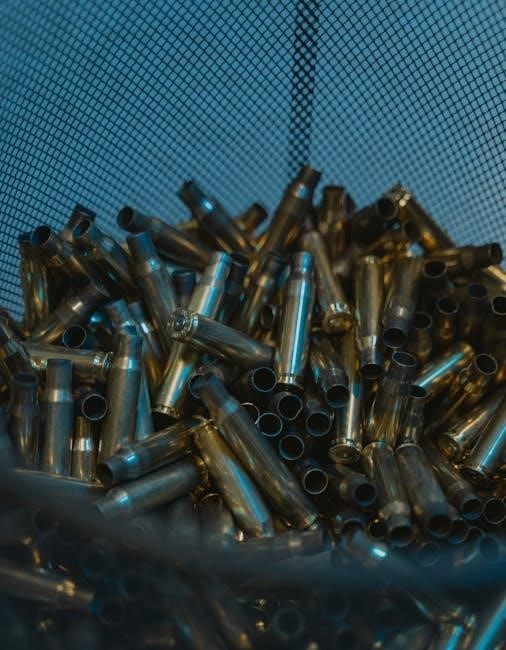
Shotgun shell reloading offers cost savings and customization, allowing shooters to tailor loads to their specific needs and firearms. This practice, detailed in a
manual, involves disassembling spent shells, replacing components, and reassembling them with new primers, powders, wads, and shot, ultimately enhancing performance.
Safety Precautions
Reloading shotgun shells demands unwavering adherence to safety protocols. Always wear eye protection to shield against potential debris, and utilize a well-ventilated workspace to avoid inhaling powder fumes. Never smoke or introduce open flames near reloading components.
Handle powders with extreme care, avoiding spills and static electricity. Double-check every step, verifying powder charges and component compatibility against established reloading data. Incorrect loads can lead to dangerous overpressures and firearm damage.
Be acutely aware of unsafe firearm and ammunition combinations. Never assume a load is safe simply because it fits in the shell; consult reliable sources like Hodgdon or Vihtavuori. Store components securely, away from children and unauthorized access. Prioritize safety above all else – it’s paramount in this meticulous craft.
Essential Equipment for Reloading
A dedicated workspace is fundamental, alongside a quality reloading press – single-stage presses are ideal for beginners, while progressive presses increase efficiency. A set of calibrated reloading scales is crucial for accurate powder charges, ensuring safe and consistent loads.
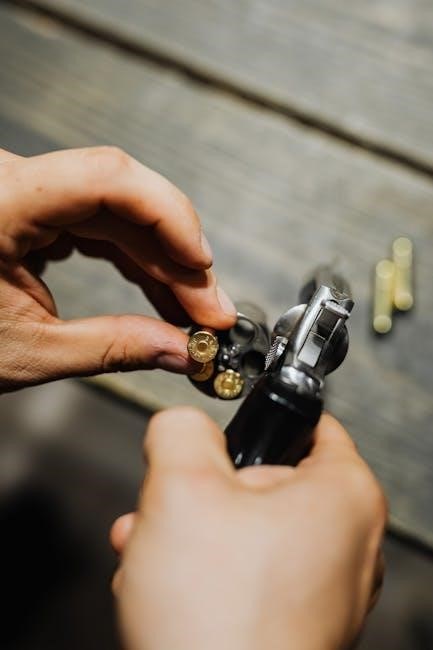
Shell holders, specific to the shotgun gauge, securely hold the hull during operations. Priming tools, either hand-held or integrated into the press, seat new primers correctly. Powder measures dispense precise powder volumes, while wadding trays organize components.
Crimping tools are vital for securing the final closure. A kinetic bullet puller aids in correcting errors. Finally, a comprehensive reloading manual, like those from Hodgdon or Federal, provides essential load data and guidance. Investing in quality equipment ensures both safety and precision.

Understanding Shotgun Shell Components
Shotgun shells comprise hulls, primers, wads, and powder, each playing a critical role in performance. Mastering these components, as detailed in a manual, is key to successful reloading.
Hull Types and Materials
Shotgun hulls, the cartridge’s body, are primarily constructed from plastic, though older designs utilized paper. Modern plastic hulls offer durability and are often re-loadable multiple times, making them economical for dedicated reloaders. Different hull materials impact performance characteristics; for instance, thicker hulls generally withstand higher pressures.
Remington Power Piston SP10 hulls are specifically mentioned, indicating a popular choice among reloaders. Understanding hull compatibility with various wads and primers is crucial. Hull types also influence the crimping process, affecting the final seal and gas check. Reloading manuals detail specific hull recommendations for each load recipe, ensuring safe and optimal performance. Careful inspection of hulls for cracks or damage before reloading is paramount for safety.
Primer Selection
Primer selection is a critical aspect of shotgun shell reloading, directly influencing ignition and pressure. 209 shotgun primers are commonly used, but variations exist within this type, impacting sensitivity and performance. Choosing the correct primer is dictated by the hull type, powder selection, and desired velocity.
Reloading data sources, like those from Hodgdon, Vihtavuori, and Federal, specify recommended primers for each load. Using a primer not listed in the data can lead to under- or over-pressure situations, posing a safety risk. Consistent primer brands within a specific load are also vital for predictable results. Always inspect primers for damage before use, and handle them with care to avoid accidental ignition. Proper seating of the primer is essential for reliable function.
Wad Types and Function
Wad types are crucial for creating a gas seal, separating the powder charge from the shot column, and guiding the shot down the barrel. Different wad designs cater to specific loads and hull types. Common types include one-piece wads, fiber wads, and cushion wads, each offering unique advantages. Butler wads, for example, are frequently used in 20-gauge loads, with variations like 1/2 fiber and .125 card wads utilized for specific buffering and shot protection.
The function of the wad is to efficiently transfer gas pressure from the burning powder to propel the shot column. Proper wad fit is paramount; a loose wad results in gas leakage and reduced velocity, while a too-tight wad can increase pressure. Load data will specify the appropriate wad type and, often, the need for over-shot or under-shot cards for optimal performance.
Powder Selection for Shotgun Shells
Powder selection is arguably the most critical aspect of shotgun shell reloading, directly impacting velocity, pressure, and overall performance. Numerous powders are suitable for shotgun shells, each with distinct burn rates and characteristics. The Hodgdon Reloading Data Center lists 21 powders for the .308 Winchester, illustrating the variety available to reloaders, though specific shotgun powders differ.
Vihtavuori provides detailed data for various shotgun loads, emphasizing the importance of matching powder to the hull, wad, and shot charge. Load data, like that from Federal, carefully develops high-performance combinations. Understanding burn rate charts helps identify propellants suited for desired velocities. Always adhere strictly to published load data; exceeding maximum charges can create dangerous pressure levels.

Reloading Data Sources and Interpretation
Reliable data sources, such as Hodgdon, Vihtavuori, and Federal, are crucial for safe and effective reloading, providing detailed load information and essential terminology.
Hodgdon Reloading Data Center
The Hodgdon Reloading Data Center (RDC) stands as a premier resource for shotgun shell reloaders, offering an extensive and meticulously curated database of load data. Currently, the RDC lists 21 distinct powder types suitable for the .308 Winchester, demonstrating its broad applicability across various calibers. However, its value extends far beyond rifle cartridges, encompassing a wealth of information specifically tailored for shotgun reloading.
Navigating the RDC is straightforward, allowing users to filter data by gauge, hull type, powder, and shot charge. Each load listing provides critical parameters, including powder weight, primer type, wad selection, and anticipated velocity. It’s essential to remember that all listed loads are starting points, and careful consideration should be given to individual firearm characteristics and environmental conditions. Always consult the complete data sheet and adhere strictly to the recommended parameters for safe reloading practices. The RDC also provides a convenient burn rate chart, enabling reloaders to compare powder performance and identify the optimal propellant for their specific needs.
Vihtavuori Reloading Data
Vihtavuori presents a comprehensive collection of shotshell reloading data, catering to a diverse range of shotgun gauges and applications. Their data files are meticulously developed, providing detailed powder and load information designed to maximize performance and consistency. Reloaders can explore a wide spectrum of loads, utilizing various hulls, wads, powder charges, and shot weights, all supported by rigorous testing and analysis.
Accessing Vihtavuori’s latest data ensures reloaders are equipped with the most current and accurate information available. The resource offers detailed insights into powder characteristics, enabling informed decisions regarding propellant selection. Furthermore, Vihtavuori provides an official burn rate chart, a valuable tool for comparing powder performance and pinpointing the ideal propellant for specific reloading objectives. Downloading the latest version in PDF format offers quick and convenient access to this essential data, empowering reloaders to craft precise and effective shotgun shells.
Federal Component Data
Federal provides meticulously crafted, high-performance reloading data specifically designed to unlock the full potential of their components. This data is a valuable resource for reloaders seeking to achieve optimal results with Federal hulls, primers, and wads. The information presented is the result of extensive testing and development, ensuring both accuracy and safety.
By utilizing Federal’s carefully developed load data, reloaders can confidently create shotgun shells that deliver exceptional ballistics and consistent patterns. The data files cover a wide range of gauges and shot sizes, offering solutions for various shooting disciplines. Federal emphasizes the importance of adhering to published load data and cautions against exceeding recommended powder charges. Accessing this resource allows shooters to elevate their craft and experience the superior performance that Federal components are known for, maximizing their investment and enjoyment.

Understanding Load Data Terminology (Glossary of Abbreviations)
Reloading data often utilizes a specialized vocabulary of abbreviations, which can be confusing for beginners. A comprehensive glossary is essential for safe and accurate load development. Common terms include “SP” denoting a straight wall primer pocket, while “LP” signifies a large pistol primer. Understanding “PSI” (pounds per square inch) is crucial for pressure management, and “SD” represents standard deviation, indicating load consistency.
Abbreviations for wad materials, like “Fiber” or “Card,” are frequently encountered, as are those for powder types. Familiarizing yourself with these terms ensures correct component selection and prevents errors. A handy glossary, downloadable for easy reference, streamlines the reloading process. Ignoring these nuances can lead to unsafe pressures or poor performance, so mastering this terminology is paramount for any serious reloader seeking precision and safety in their ammunition crafting.
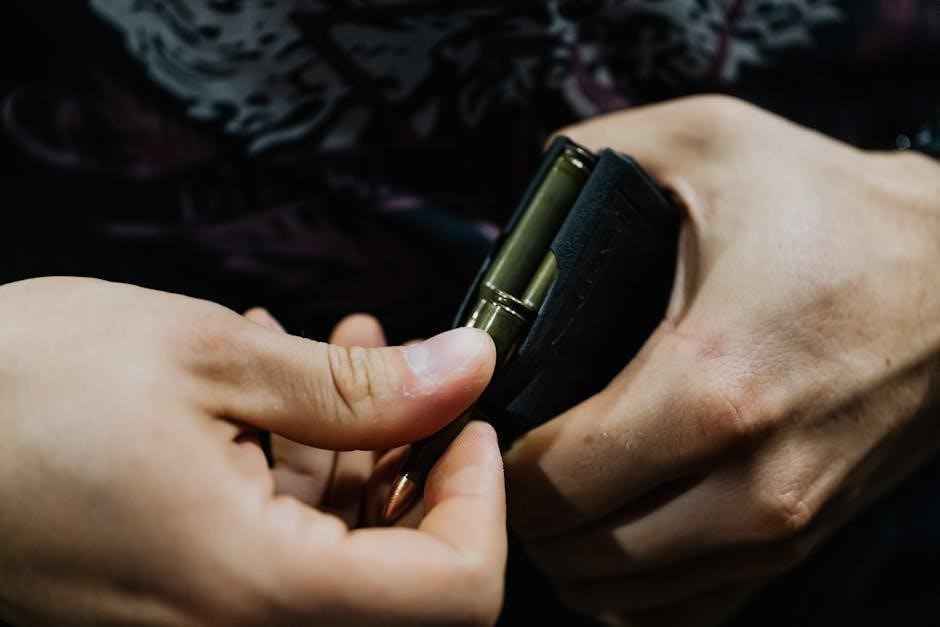
Specific Load Data Examples (Based on Provided Information ー 04/07/2026)
Current data showcases 20-gauge loads with Remington Power Piston SP10, Butler wads, and Tru-Square 520 buffer, alongside 12-gauge options utilizing Butler card over shot.
20 Gauge Load Data ― Remington Power Piston SP10 & Butler Wads
This section details 20-gauge loads utilizing the Remington Power Piston SP10 primer in conjunction with Butler wads. Specifically, configurations include a Remington Power Piston SP10, one 20ga Butler 1/2 fiber wad, and two 20ga Butler .125 card wads positioned under the shot column. This combination aims to provide consistent and reliable performance.
Repeatable results are achieved through precise component selection and adherence to established reloading protocols. These loads are designed for optimal patterning and effective target acquisition. Remember to always consult comprehensive reloading manuals and data sources for the most up-to-date information and safety guidelines. Careful attention to detail is paramount when reloading ammunition.
Further experimentation with different shot weights and wad combinations can fine-tune these loads to match individual preferences and shooting conditions. Always prioritize safety and responsible reloading practices.
20 Gauge Load Data ― Utilizing Tru-Square 520 Buffer
This data focuses on 20-gauge loads incorporating Tru-Square 520 buffer, a component designed to enhance powder column stability and improve shot pattern consistency. A typical load configuration includes a Remington Power Piston SP10 primer, one 20ga Butler 1/2 fiber wad, and 20 grains of Tru-Square 520 buffer positioned before the shot column. This buffering agent helps to minimize powder compression and maintain uniform pressure.
The inclusion of the Tru-Square 520 buffer can be particularly beneficial when using powders sensitive to compression or when seeking to optimize performance with specific wad-shot combinations. Always cross-reference this data with current reloading manuals and component specifications.
Consistent reloading practices and meticulous attention to detail are crucial for achieving optimal results and ensuring safe ammunition. Experimentation within published guidelines is encouraged to tailor loads to individual firearm characteristics.
12 Gauge Load Data ― Butler Card Over Shot
This section details 12-gauge load data utilizing a Butler .030 card placed over the shot column. This technique aims to create a gas seal, reducing felt recoil and potentially improving pattern density by delaying gas escape. A representative load consists of a Remington Power Piston SP10 primer, a suitable wad (specific type not detailed in provided data), a measured powder charge, followed by the shot column, and finally, the .030-inch thick Butler card.
The card’s placement is critical; it must sit securely atop the shot without compressing it excessively. Careful consideration should be given to powder selection and charge weight, as the card adds a slight volume restriction within the shell.
Always consult comprehensive reloading manuals for complete load data and safety guidelines before attempting to replicate these configurations. Precise measurements and adherence to published data are paramount for safe and effective reloading.
Advanced Reloading Techniques
Mastering crimping and understanding velocity/pressure relationships are crucial for experienced reloaders seeking optimal performance and consistency in their shotgun shell creations.
Crimping Techniques
Crimping is a vital step in shotgun shell reloading, securing the wad column and ensuring a consistent gas seal during firing. Different crimp styles exist, each suited to specific wad and hull combinations. A proper crimp prevents gas leakage, maximizing velocity and pattern density.
Reloaders employ various methods, including roll crimps and taper crimps, utilizing specialized crimping tools. The roll crimp, often preferred for target loads, involves tightly rolling the hull material over the wad. Conversely, taper crimps are frequently used with thicker hulls and heavier loads.
Achieving the correct crimp depth and uniformity is paramount. Insufficient crimping can lead to poor patterns and reduced velocity, while over-crimping may increase pressure. Careful adjustment of the crimping tool and consistent technique are essential for reliable results. Visual inspection and shell gauge measurements help verify proper crimp quality.
Velocity and Pressure Considerations
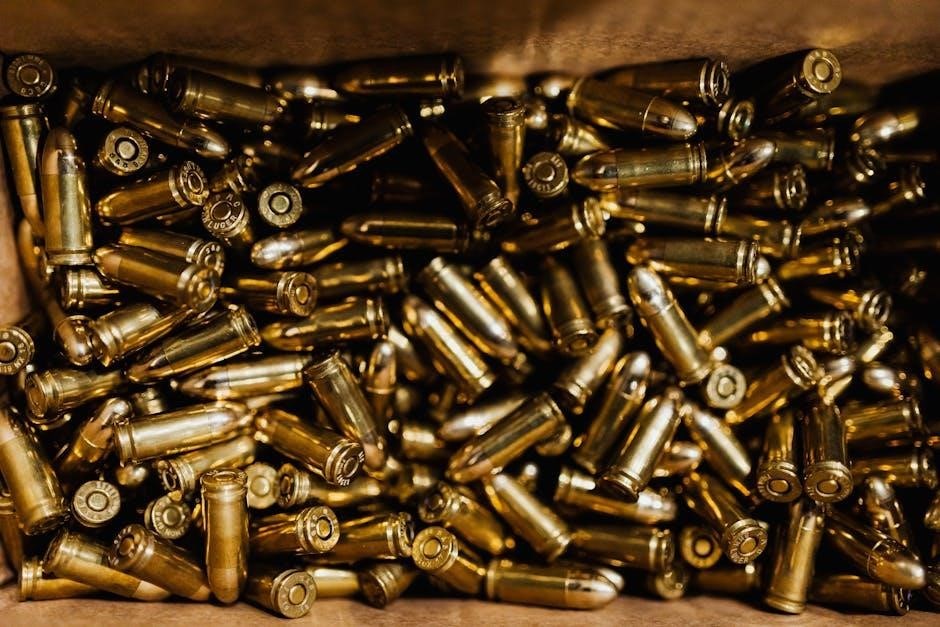
Understanding velocity and pressure is crucial for safe and effective shotgun shell reloading. Published load data provides guidelines, but factors like temperature, hull type, and component variations can influence these parameters.
Exceeding maximum pressure limits, as defined by SAAMI standards, can damage firearms and cause serious injury. Conversely, insufficient pressure may result in incomplete combustion and inconsistent performance. Reloaders must adhere strictly to published data and avoid exceeding recommended powder charges.
Velocity impacts shot pattern and effective range. Higher velocities generally yield tighter patterns but also increase recoil. Careful consideration of these trade-offs is essential. Monitoring velocity with a chronograph allows for precise load adjustments and ensures consistency. Always prioritize safety and adhere to established reloading principles.
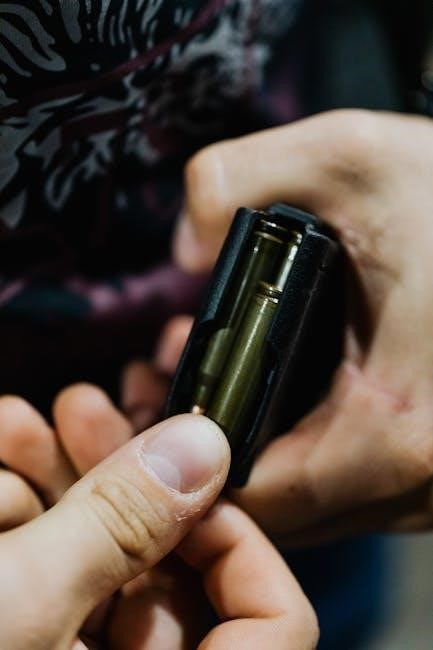
Troubleshooting Common Reloading Issues
Reloading issues like misfires or inconsistent patterns require careful diagnosis; examining components, verifying data, and ensuring proper technique are vital for resolution.
Misfires and Hangfires
Misfires, where the primer fails to ignite the powder charge, can stem from several sources. These include defective primers, insufficient firing pin impact (potentially due to a firearm issue), or a damp primer. Always handle a misfired shell with extreme caution, waiting a substantial period – at least 60 seconds – before carefully opening the action and inspecting the primer.
Hangfires, conversely, involve a noticeable delay between trigger pull and ignition. This is a more dangerous situation, potentially indicating an issue with the powder itself, such as moisture absorption or improper storage. Never assume a hangfire is a dud; maintain a safe firing position and await ignition. If it doesn’t occur after a reasonable delay, treat it as a misfire.

Consistent issues with either misfires or hangfires necessitate a thorough review of your reloading process, component quality, and storage conditions. Prioritize safety and consult experienced reloaders or the component manufacturer if problems persist.
Patterning and Shot Distribution
Patterning is crucial for understanding how your reloaded shells perform in your specific shotgun. This involves shooting at a target with a full-size pattern board, typically at 40 yards, and analyzing the resulting spread of shot. Consistent, dense patterns indicate a well-balanced load and proper component selection.
Factors influencing shot distribution include wad type, shot size, powder charge, and choke constriction. Different wads create varying degrees of gas seal and shot cushioning, impacting pattern density. Experimenting with these variables allows you to optimize loads for your intended purpose – whether it’s upland game, waterfowl, or clay target shooting.
Analyzing the pattern reveals holes and open spaces, indicating areas of weak coverage. Adjusting your load data based on these results ensures maximum effectiveness and ethical shot placement. A reloading manual will guide you through this process.